

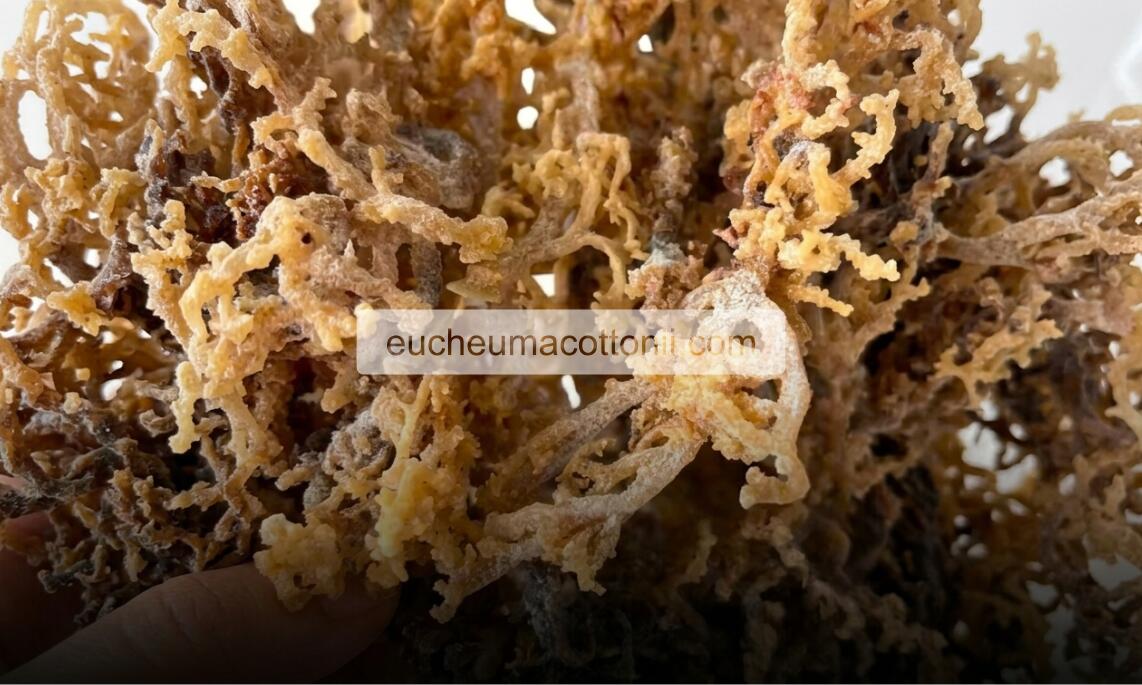
In recent years, Indonesian seaweed has gained increasing attention as a high-value commodity in international markets. One of the products holding an important position within the global seaweed supply chain is Indonesian Eucheuma Cottonii, commonly referred to in modern trade as cottonii and widely associated with the species Kappaphycus alvarezii. FAO literature explains that the term “cottonii” is broadly used in commercial trade to describe seaweeds that produce kappa-carrageenan, with Kappaphycus alvarezii being one of the most commercially important sources.
For Australian buyers, choosing a seaweed supplier is not simply a matter of price. Raw material consistency, post-harvest quality, product specifications, supply capacity, document transparency, and readiness to meet import requirements all play an important role in the procurement process. Australia also requires imported food sold in the country to comply with applicable Australian food safety standards and biosecurity requirements.
In this context, Eucheuma Cottonii for Australia presents an attractive opportunity when suppliers can combine Indonesia’s raw material advantages with professional quality control and export management systems. So, what factors make Indonesian seaweed increasingly attractive to Australian buyers and processing industries?
Indonesia Has a Large Seaweed Production Base
One of the main reasons an Indonesian Eucheuma Cottonii supplier can be competitive in global markets is the availability of raw materials. Indonesia has an extensive coastline and tropical conditions that support the development of seaweed farming. Data from Indonesia’s Ministry of Marine Affairs and Fisheries indicates that national seaweed production reached approximately 10.8 million tonnes in 2024, while national seaweed development programmes identify Eucheuma cottonii as one of the priority commodities.
Regional production data also shows that Eucheuma cottonii is cultivated across several production centres, including East Nusa Tenggara, East Java, Central Sulawesi, North Kalimantan, and South Sulawesi. This reflects the broad geographic distribution of Indonesia’s seaweed production base.
For Australian importers, a widely distributed production network can provide advantages in terms of dried seaweed availability, commercial-volume sourcing, and opportunities to establish long-term supply chains. However, large production capacity must be supported by consistent quality standards so that higher volumes do not come at the expense of product specifications.
Indonesia’s Tropical Climate Supports Cottonii Cultivation
Geography is another important advantage of Indonesian Eucheuma Cottonii. As a tropical seaweed commodity, cottonii is cultivated in coastal areas with water conditions suitable for its growth. Indonesia’s Ministry of Marine Affairs and Fisheries has also identified the development of cottonii cultivation in several parts of eastern Indonesia as part of its strategy to improve seaweed productivity.
These conditions have given Indonesia extensive experience in Eucheuma Cottonii cultivation, from seed stock development and farming to harvesting and drying. Farmers’ experience is particularly important because seaweed quality is influenced not only by the species itself, but also by cultivation methods and post-harvest handling practices.
In international trade, Australian buyers naturally require suppliers that can do more than simply offer a product. They also need partners who understand how to maintain product specifications consistently from the farming site through to shipment.
Post-Harvest Quality Is a Critical Factor
Competitive pricing alone is not enough to retain customers when product quality varies from one shipment to another. For this reason, Eucheuma Cottonii quality is one of the most important factors in business relationships between Indonesian exporters and Australian buyers.
Harvested seaweed must be handled properly to preserve its raw material characteristics. Drying, sorting, removal of foreign materials, packaging, storage, and moisture control are all important stages that require careful attention.
For Australian seaweed buyers, consistent specifications are easier to assess when a supplier has clearly defined internal standards. Information such as moisture content, physical condition, cleanliness, size and form, product type, drying method, and packaging specifications can improve transparency between suppliers and buyers.
For this reason, the phrase export-quality seaweed should not be treated merely as a marketing slogan. Such a claim should be supported by measurable quality parameters, relevant documentation, inspection procedures, and quality-control processes that can be clearly explained to prospective buyers.
Reliable Documentation Builds Buyer Confidence
The Australian market has food safety and biosecurity requirements that exporters need to understand. Australia’s Department of Agriculture, Fisheries and Forestry explains that imported food intended for sale must be safe and comply with Australian food standards, while also meeting applicable biosecurity requirements.
This means that exporting Eucheuma Cottonii to Australia requires more than production capability. Suppliers must also pay attention to trade documentation, product specifications, product information, shipping documents, and other relevant requirements based on the product classification and intended use.
Interestingly, Australian official information distinguishes seaweed products according to scientific groups. For example, brown seaweed, or seaweeds within the class Phaeophyceae, may fall under certain food-related import inspection categories, while seaweed from other scientific classes may be treated differently.
Because cottonii is a red seaweed belonging to the Rhodophyta group, its classification must be accurately established during export procedures. This highlights why exporters should provide precise species information and product descriptions rather than relying solely on commercial terminology without appropriate technical clarification.
Quality Consistency Matters More Than Exaggerated Claims
In international B2B markets, buyers generally look for certainty and information that can be verified. Therefore, an Eucheuma Cottonii export quality marketing strategy should prioritise transparency rather than overly broad claims.
Instead of claiming that a product is “the best in Australia,” for example, suppliers can provide clear information about available product specifications, the quality-control system in place, sorting procedures, drying methods, packaging standards, supply capacity, and supporting documentation.
This approach is also consistent with the principles outlined in Google Search Essentials, which emphasise useful, trustworthy content created for people. Google also warns against producing large volumes of content that provide little added value and simply repeat keywords in an attempt to manipulate search rankings.
As a result, Indonesian seaweed supplier SEO should not depend on excessive keyword repetition. Content that addresses buyer needs, explains product specifications, demonstrates company credibility, and provides relevant information is far more valuable.
Safety and Product Specifications Should Be Priorities
Food safety requirements are an aspect that cannot be overlooked when targeting the Australian seaweed market. FSANZ has conducted surveys concerning iodine levels in seaweed and seaweed-based products. Monitoring results indicate that most products were within safe iodine levels, although some seaweed varieties can naturally contain higher iodine concentrations.
FSANZ also explains that Australian monitoring includes certain categories, such as brown seaweed and hijiki, which receive attention in relation to iodine and inorganic arsenic.
For exporters, this reinforces the importance of understanding the characteristics of the products being shipped. A seaweed supplier in Indonesia for Australia should ensure that each product is presented with accurate identification and clear specifications, without applying characteristics from one type of seaweed to another.
Sustainability Adds Value in Global Markets
Beyond quality and price, sustainability is becoming increasingly relevant across international supply chains. Seaweed farming can contribute to coastal economies while creating income opportunities for farming communities.
Indonesia’s Ministry of Marine Affairs and Fisheries continues to support the development of farming centres, area revitalisation, and the use of tissue culture technology to improve the quality and productivity of seaweed seed stock.
For Australian Eucheuma Cottonii buyers, information about raw material origin, cultivation practices, supplier management, and traceability can become an additional consideration during supplier evaluation. Going forward, suppliers capable of combining quality, consistency, transparency, and responsible cultivation practices are likely to hold a stronger position in international trade.
Why Should Australian Buyers Consider Indonesian Suppliers?
Ultimately, the appeal of Indonesian Eucheuma Cottonii does not come from a single factor. Its competitiveness is built on a combination of a large production base, extensive farming experience, a tropical climate, strong potential as a source of kappa-carrageenan, a broad network of production centres, and opportunities to develop increasingly professional supply chains. Indonesia’s Ministry of Marine Affairs and Fisheries has also identified cottonii as an important focus within the country’s seaweed development strategy because of its contribution to production and its continued market potential.
For Australian buyers, selecting an Indonesian Eucheuma Cottonii supplier should be based on a comprehensive evaluation of quality consistency, technical specifications, supply capacity, documentation accuracy, communication, packaging, traceability systems, and compliance with Australian import requirements.
With this approach, international trade does not have to end with a single transaction. Suppliers and buyers can build long-term partnerships based on consistent quality, transparency, and trust.
CV Mega Surya Nusantara as an Indonesian Seaweed Supply Partner
As part of its international market development strategy, CV Mega Surya Nusantara places raw material quality, supply consistency, business communication, and buyer requirements at the centre of its supplier services. For the Australian market, this approach is particularly relevant because industrial buyers need more than a specific volume of seaweed. They need raw materials supported by clear product information and well-organised export and trade processes.
For companies currently looking for Eucheuma Cottonii Indonesia for Australia, supplier evaluation should be carried out directly by requesting product specifications, supply capacity, packaging formats, supporting documentation, and technical requirements before placing an order.
Indonesia has a significant opportunity to strengthen its position in the global seaweed supply chain. With consistent quality, increasingly professional export management, and a transparent approach to international business, Indonesian Eucheuma Cottonii can be a competitive option for Australian buyers seeking reliable seaweed raw materials from Southeast Asia.