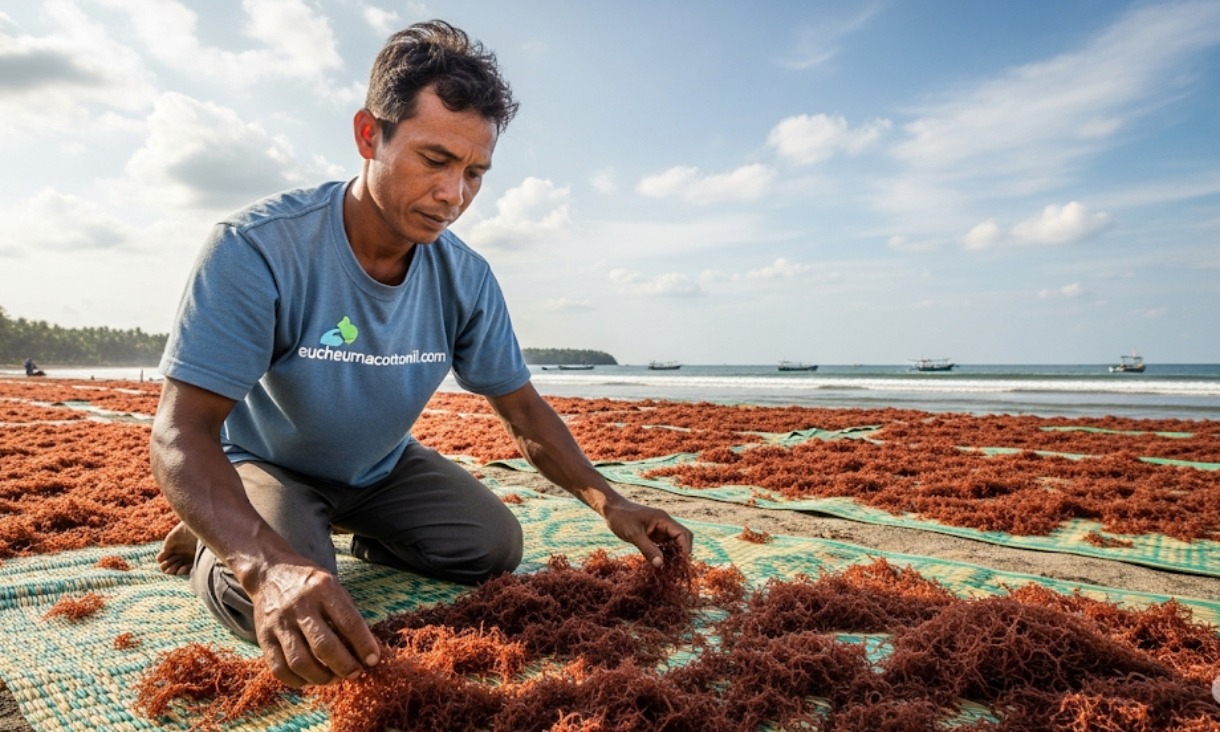
Eucheumacottonii.com – Gracilaria species, which are red seaweeds often cultivated for agar and various other applications, are seeing a rise in farming across the globe. As the seaweed aquaculture industry grows, it’s essential for policymakers, coastal managers, and producers to grasp the environmental trade offs associated with Gracilaria farming to ensure sustainable development. This article delves into what Gracilaria farming entails, highlights the key environmental benefits and risks, and suggests practical measures for mitigation along with research priorities.
What is Gracilaria and why is it farmed?
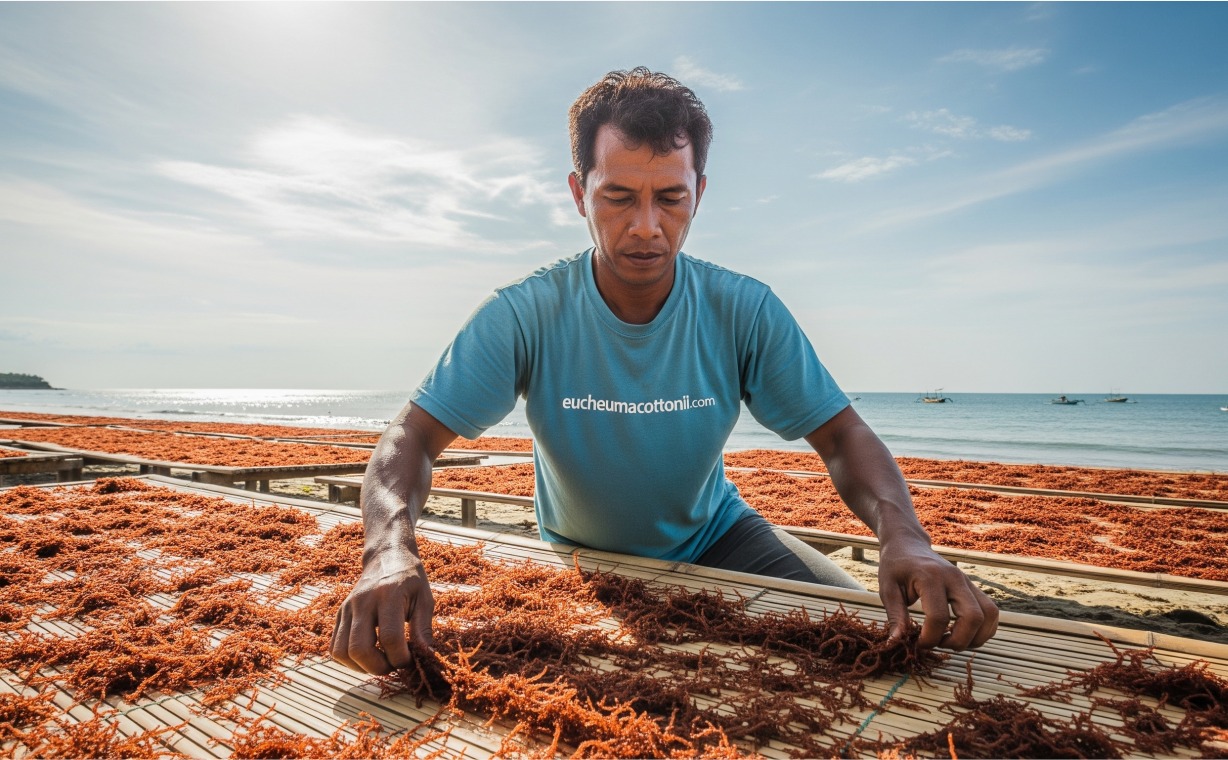
Gracilaria is a type of red algae that thrives in both tropical and temperate coastal waters. It’s popular for farming because it’s easy to grow, has a quick growth rate, and provides agar along with other commercial products.
Various species, like G. edulis, G. chilensis, and G. vermiculophylla, find their way into food, pharmaceuticals, and bioproducts. The warm waters where they grow allow for multiple harvests throughout the year in the right locations. Farming techniques can vary from simple setups using intertidal ropes and longlines to more advanced offshore arrays.
The Pros Environmental benefits of Gracilaria farming
1. Nutrient removal and water-quality benefits
Gracilaria species are fantastic at absorbing dissolved nitrogen and phosphorus from the water, making them incredibly useful for bioextraction in nutrient-rich coastal areas and for cleaning up aquaculture waste, like what comes from shrimp or fish ponds.
Numerous studies, both experimental and in the field, have shown that Gracilaria can take up a lot of nutrients and grow significantly, highlighting its potential to help lower local nutrient levels when used in farm or bay management.
2. Carbon uptake and mitigation potential
Macroalgae, like Gracilaria, are champions of photosynthesis, which means they’re great at soaking up CO₂. The estimates for how much carbon they can capture really depend on the species, the design of the farm, and where it’s located. However, when cultivated intensively especially with innovative harvesting or burial methods these seaweeds can store or offset impressive amounts of CO₂ on a local level.
While seaweed farming isn’t a magic solution to climate change, it can definitely play a role in coastal carbon strategies, especially when combined with careful accounting and realistic expectations.
3. Habitat provisioning and biodiversity benefits (context-dependent)
Seaweed farms can create a three-dimensional habitat in areas that would otherwise be quite bare. This can draw in various invertebrates and fish, often leading to a boost in local biodiversity and fisheries productivity.
In certain environments, stands of Gracilaria can serve as nursery habitats or provide shelter for smaller organisms, which in turn can help support local food webs and the livelihoods that depend on them. However, the impact and extent of these benefits really depend on the existing local habitats and how the farms are designed.
4. Synergies with integrated systems and circular aquaculture
Gracilaria often plays a key role in integrated multi-trophic aquaculture (IMTA), where seaweeds, shellfish, and finfish are grown together. In this setup, Gracilaria helps to absorb waste produced by the fed species, promoting nutrient recycling.
This not only boosts the overall efficiency of the system but also lessens the environmental impact of finfish and shrimp farming. By fostering this integration, we enhance circularity and can bolster the economic resilience of coastal producers.
5. Socio-economic benefits that support conservation incentives
Seaweed farming brings in much needed income for coastal communities, particularly in areas where job options are limited. When managed properly, these income opportunities can encourage local residents to take care of their coastal environments.
Communities that have a financial stake in keeping their waters healthy are more likely to back conservation efforts, which in turn can benefit both wild seaweed populations and the surrounding ecosystems.
The Cons Environmental risks and drawbacks
1. Invasive potential and ecological disruption
When it comes to invasive potential and ecological disruption, some Gracilaria species, especially G. vermiculophylla, can be quite the troublemakers outside their native habitats. Once they make their way into new environments, they tend to outcompete local algae and seagrasses, mess with sediment dynamics, smother seagrass beds, and even change the makeup of local communities.
This can lead to some pretty negative impacts on native biodiversity and the ecosystem services we rely on. Invasions like these often happen due to escapes from farms or unregulated translocations.
2. Changes to Local Habitats and Seafloor Effects
Large or densely packed seaweed farms can really shift the dynamics of water flow, light levels, and sediment patterns. In calm or shallow bays, the breakdown of seaweed or a high amount of biomass can lead to lower oxygen levels on the seafloor at night or under specific conditions, which might put stress on the benthic communities.
Additionally, the infrastructure used in these farms, like lines and anchors, can physically change the bottom habitats and disrupt delicate benthic ecosystems.
3. Disease, pests, and genetic risks
Intensive farming practices can heighten the chances of disease outbreaks and increase the load of epiphytes, which may spread between farms and into wild populations. When non-native strains or selectively bred varieties are cultivated without proper precautions, it can compromise the genetic integrity of local wild populations through escape and hybridization, which might hinder their ability to adapt to local conditions. Systematic reviews highlight the need to monitor disease facilitation and genetic changes as key areas of concern.
4. Conflicts with other coastal uses and visual/amenity impacts
Conflicts can arise between seaweed farms and other coastal activities like fishing, navigation, and tourism, especially if there’s no consultation with stakeholders. The presence of floating gear and long lines might be seen as an eyesore, and if not properly managed, the seasonal buildup of biomass could detract from the beauty of the beach.
5. Overstated climate claims without solid accounting
While it’s true that seaweed can capture carbon, figuring out how much of that carbon actually sticks around for the long haul is still a tricky puzzle for researchers. Some of the grand claims about seaweed’s role in carbon removal overlook the real-world challenges and ecological limits we face. To really understand the impact of seaweed farming on carbon credits, we need to conduct thorough lifecycle assessments.