
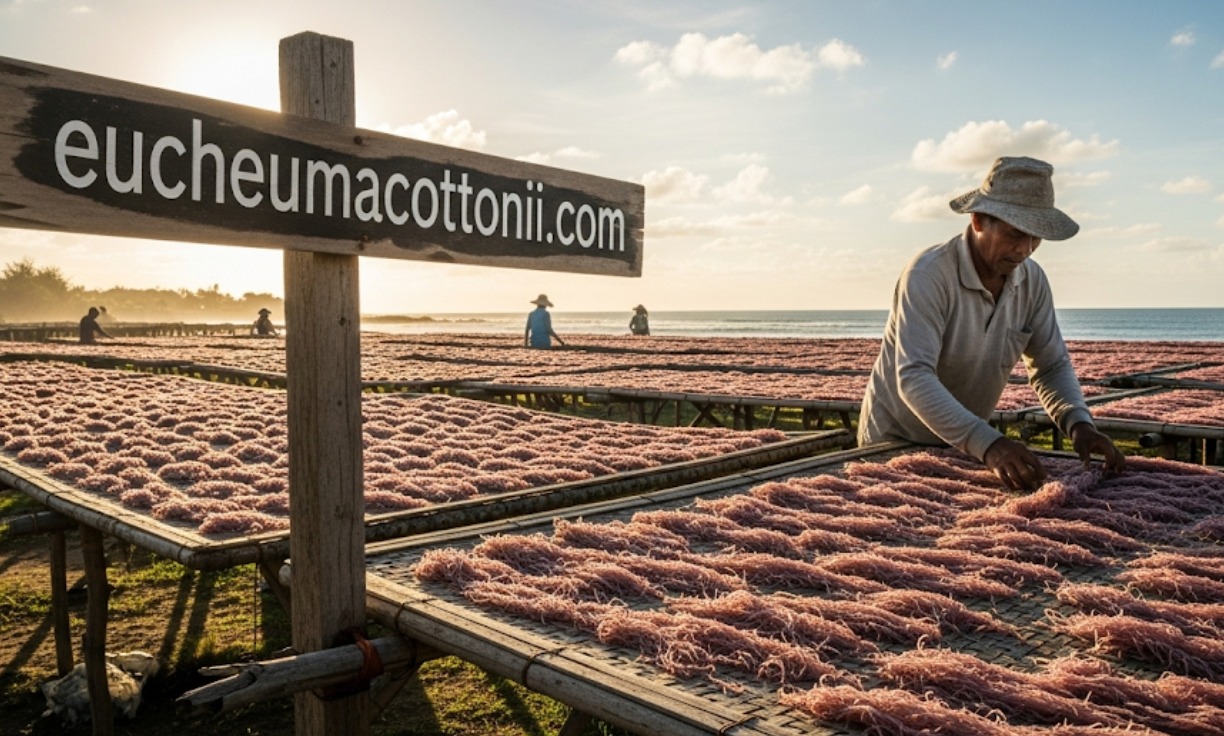
eucheumacottonii.com – Sustainable aquaculture is quickly becoming a vital part of our global food system, especially as the demand for seafood rises and wild fisheries struggle with overfishing and environmental stress. In this scenario, seaweeds like Gracilaria a type of red macroalgae that’s commonly grown for agar and as animal feed are starting to get the spotlight. They’re not just valuable for their economic potential; they also offer significant ecological benefits.
Gracilaria acts like a natural filter in aquaculture setups, enhancing water quality by soaking up excess nutrients, creating complex habitats, and supporting integrated multi-trophic aquaculture (IMTA) strategies that help recycle waste and lessen environmental impacts. This article delves into how Gracilaria helps create healthier aquaculture environments, practical methods for cultivation, its environmental advantages, some challenges, and tips for incorporating Gracilaria into sustainable seafood production systems.
How Gracilaria Improves Water Quality
Gracilaria plays a significant role in enhancing water quality, primarily through its ability to absorb nutrients. In aquaculture, particularly in intensive finfish and shrimp farms, the breakdown of feed and waste produces dissolved inorganic nutrients like ammonium and nitrate, along with organic nitrogen and phosphorus. Gracilaria, along with other macroalgae, takes in these dissolved nutrients during photosynthesis and growth, effectively cleaning them from the water.
This natural biofiltration process helps lower nutrient levels that could otherwise lead to issues like eutrophication, algal blooms, hypoxia, and degradation of the seafloor around farms. In addition to nitrogen and phosphorus, Gracilaria can also absorb dissolved carbon and some trace elements, which helps maintain a better chemical balance in the ecosystem.
Since the uptake by macroalgae is a biological and low-energy process, it serves as a cost-effective alternative to mechanical or chemical water treatment, especially in coastal and pond systems where water exchange is limited or where nutrient discharge is closely monitored.
Integrated Multi-Trophic Aquaculture (IMTA) and System Design
Gracilaria is essential in IMTA, a design approach that brings together species from various trophic levels, including fed species like fish or shrimp, suspension feeders such as mussels, and extractive species like seaweed. This collaboration fosters a balanced nutrient cycle.
In an IMTA setup, Gracilaria takes in dissolved waste from the fed species and transforms it into harvestable biomass, which can serve as a feed supplement, fertilizer, or even raw material for agar and other bioproducts. When placed thoughtfully within or downstream of culture units, Gracilaria beds function as biological sinks for dissolved nutrients, helping to reduce the negative effects of effluents downstream.
The practical designs of IMTA can range from simple seaweed gardens along pond edges to intricate raft-based systems in marine cages. Each design needs to take into account local water dynamics, light availability, and nutrient flow to optimize uptake efficiency. Ensuring that seaweeds are positioned to receive enough nutrient-rich water without being overwhelmed or deprived is crucial for achieving consistent water quality benefits while also producing valuable biomass.
Biophysical and Habitat Benefits
Gracilaria does more than just filter chemicals; it plays a vital role in enhancing the physical and biological aspects of its environment. When you have dense stands of Gracilaria, they create a more complex habitat that offers shelter and foraging opportunities for young fish, invertebrates, and helpful microorganisms.
This kind of structural habitat not only boosts biodiversity around farms but also acts as a protective barrier against sediment resuspension by softening the impact of currents and waves. By stabilizing sediments and fostering microbial communities that break down organic material, Gracilaria indirectly promotes the health of the benthic ecosystem. Plus, when seaweed is harvested regularly, it helps keep nutrient loads in the sediment lower than in systems where organic matter is allowed to pile up unchecked.
Carbon Sequestration and Climate Co-Benefits
While seaweed doesn’t store carbon on land like trees do, Gracilaria captures dissolved inorganic carbon during photosynthesis, effectively locking carbon into its biomass. When parts of this biomass are taken from the farm and used in long-lasting products, like biochar or soil amendments, or even stored in coastal sediments, it can lead to a net removal of carbon from the local environment.
Even when it’s used as animal feed or processed quickly, substituting seaweed-based products for more carbon-heavy options (like synthetic fertilizers) offers indirect climate benefits. However, it’s crucial to understand that the permanence and scale of carbon sequestration through seaweed can vary significantly based on how the biomass is handled and local practices. Therefore, seaweed should be viewed as a valuable part of a broader strategy for climate smart aquaculture rather than a one size fits all solution.
Economic and Social Advantages
Integrating Gracilaria into aquaculture brings a wealth of economic and social benefits that can really boost the resilience of coastal communities. This versatile seaweed can be sold for agar extraction, used as raw seaweed in food markets, or transformed into animal feed supplements and fertilizers.
For small scale farmers, starting seaweed gardens requires a relatively low investment compared to mechanical wastewater treatments, allowing them to earn extra income while also meeting market demands for more sustainable practices.
On the social side, cultivating seaweed often creates job opportunities, especially for women and marginalized groups, which helps foster community development and diversify livelihoods. These economic advantages make it more likely that environmentally friendly practices will be embraced and maintained over time.
Cultivation Practices and Operational Considerations
When it comes to cultivating Gracilaria for improving water quality, it’s essential to pay attention to the right methods, nutrient loads, and environmental conditions. Gracilaria thrives in warm, well-lit, and moderately saline waters, with growth rates varying depending on the species and local conditions.
Common cultivation techniques include line or raft culture in marine environments and shallow pond cultivation in estuarine areas. Regular maintenance like cleaning lines, preventing fouling, and thinning or harvesting to avoid self shading is key to maximizing nutrient uptake.
Farmers need to find the right balance in harvest frequency to ensure continuous nutrient removal; leaving biomass to decay can reduce efficiency and reintroduce nutrients back into the water.
Keeping an eye on water parameters (like dissolved oxygen, temperature, salinity, and nutrient levels) alongside biomass growth is crucial for optimizing system performance. Lastly, when selecting species, it’s important to consider local biodiversity and regulations to avoid introducing non-native strains that could disrupt ecosystems.
Environmental and Regulatory Challenges
While there are undeniable benefits to incorporating Gracilaria into aquaculture, it does come with its share of ecological and regulatory hurdles. If not handled with care, intensive seaweed farming can end up competing for light and space with seagrasses and other important benthic habitats, or even disrupt local water flow patterns.
There’s also the potential for genetic pollution if cultivated strains mix with wild populations. On the regulatory side, getting the green light for coastal areas to support multifunctional aquaculture can be quite complicated, often requiring collaboration among fisheries, environmental, and coastal development agencies.
Plus, there’s a need to create or secure markets for Gracilaria products; without a solid economic incentive, farmers might hesitate to dive into seaweed cultivation. Tackling these challenges calls for tailored environmental assessments, strict adherence to best-practice biosecurity measures, and supportive policies that acknowledge multi-trophic approaches as valid strategies for both mitigation and production.
Case Applications and Evidence of Success
Across the globe, numerous pilot projects and operational farms are showcasing the potential of Gracilaria for nutrient mitigation and Integrated Multi-Trophic Aquaculture (IMTA). In various coastal areas, small to medium sized producers have successfully paired shrimp ponds with nearby seaweed gardens, reporting significant drops in nutrient concentrations in pond effluent and extra income from seaweed sales.
In marine cage systems, Gracilaria arrays mounted on rafts positioned downstream of cages have proven effective at extracting dissolved nutrients, especially when water flow supports a steady supply of nutrients. Although the results can vary based on specific environmental and operational conditions, the increasing amount of practical experience suggests that when Gracilaria is integrated thoughtfully, it offers a realistic pathway toward more sustainable, low-waste aquaculture systems.