
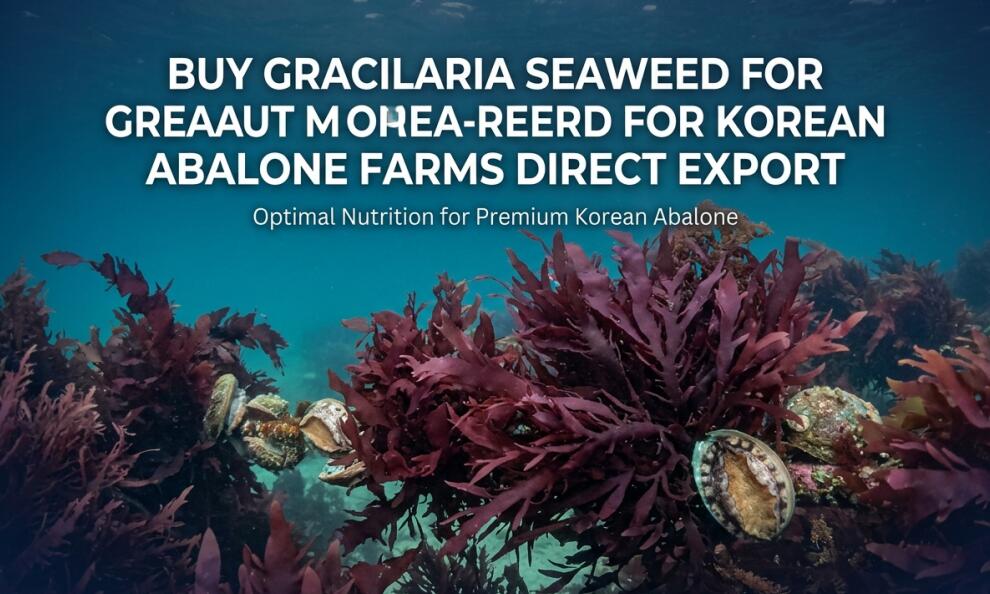
Eucheumacottonii.com – The demand for high-quality seaweed in South Korea continues to grow rapidly, especially in the aquaculture sector where abalone farming has become one of the most valuable seafood industries. Among the many types of seaweed used as feed, Gracilaria seaweed has gained a strong reputation for its nutritional value, freshness, and consistent supply. For Korean abalone farms seeking reliable raw materials, Indonesia has emerged as one of the leading global suppliers. Through direct export services, eucheumacottonii.com provides premium Gracilaria seaweed tailored specifically for the needs of Korean abalone cultivation businesses.
Indonesia is known for its vast coastal resources and tropical marine ecosystem, making it one of the best regions for cultivating Gracilaria seaweed naturally and sustainably. Korean abalone farmers prioritize seaweed quality because healthy feed directly influences abalone growth, shell quality, texture, and overall market value. This is why sourcing seaweed from experienced exporters is extremely important. At eucheumacottonii.com, the focus is not only on supplying dried seaweed in large quantities but also on maintaining export-grade quality standards suitable for the Korean aquaculture market.
Not all Gracilaria seaweed products offer the same level of quality. In fact, there can be substantial differences between seaweed harvested from different regions, cultivation methods, and post-harvest handling processes. Korean abalone farms require seaweed that meets strict standards in terms of freshness, cleanliness, moisture content, and nutritional consistency.
High-quality Gracilaria generally features vibrant coloration, low impurity levels, proper drying techniques, and excellent storage conditions. These characteristics ensure that the seaweed retains its nutritional value during transportation and long-term storage. Premium seaweed also reduces the risk of bacterial contamination or harmful substances that may threaten abalone health.
Poor-quality seaweed, on the other hand, can create serious challenges for aquaculture operations. Excessive salt, sand, mold, or decomposition may lead to slower growth rates and increased mortality. Inconsistent feed quality can also disrupt feeding patterns, causing stress among farmed abalone populations. For large-scale Korean farms managing millions of abalones, these problems can quickly translate into significant financial losses.
As a result, Korean buyers are becoming more selective when choosing international seaweed suppliers. They seek long-term partnerships with exporters who understand the technical requirements of abalone aquaculture and can consistently deliver premium Gracilaria products that meet commercial standards.
Indonesia has become one of the leading suppliers of tropical seaweed products for international aquaculture industries. With its vast coastline, favorable climate, and strong seaweed farming traditions, Indonesia produces large quantities of Gracilaria that are exported worldwide, including to South Korea.
The Indonesian seaweed industry offers several advantages that make it attractive to Korean abalone farms. First, Indonesian Gracilaria is cultivated in nutrient-rich coastal waters that support healthy seaweed growth. Second, many Indonesian producers have improved their harvesting and drying processes to meet export-quality standards required by international buyers.
In addition, Indonesia has the capacity to provide large-scale supply volumes throughout the year. This is extremely important for Korean aquaculture companies that require stable feed availability to maintain continuous abalone production cycles. Reliable supply chains help farms avoid feed shortages that could negatively impact growth performance.
Another reason Indonesian Gracilaria is highly valued lies in its competitive pricing combined with strong product quality. Korean importers often seek suppliers capable of balancing affordability with premium standards, and Indonesian exporters are increasingly able to fulfill this demand.
The nutritional profile of Gracilaria seaweed is one of the primary reasons why it is widely used in abalone farming systems. High-quality Gracilaria contains important nutrients that contribute directly to healthy abalone development.
Fiber plays a crucial role in supporting digestion and nutrient absorption in abalone. Gracilaria provides natural dietary fiber that helps maintain digestive efficiency while supporting healthy feeding behavior. Efficient digestion allows abalones to maximize nutrient intake and convert feed more effectively into body mass.
Premium Gracilaria contains important marine minerals such as calcium, magnesium, potassium, and iron. These nutrients contribute to shell formation, metabolic processes, and overall physiological health. Strong shell development is especially important in commercial abalone farming because shell quality influences market value and consumer perception.
Although seaweed is not as protein-rich as some artificial feeds, Gracilaria still provides valuable plant-based proteins that support tissue growth and muscle development. Consistent access to high-quality protein sources helps abalones achieve faster growth rates and improved harvest yields.
Seaweed naturally contains antioxidants and bioactive compounds that may help reduce stress and support immune function in marine organisms. In intensive aquaculture systems, stress management is essential because overcrowding and environmental fluctuations can increase disease risks.
High-quality Gracilaria seaweed has become an essential component of successful abalone farming in South Korea. From supporting healthy growth and shell development to improving product quality and sustainability, premium Gracilaria offers numerous advantages that directly influence aquaculture performance and profitability.
As the Korean abalone industry continues to expand, the importance of reliable seaweed supply chains will only increase. Farmers are no longer looking simply for affordable feed; they are seeking trusted partners capable of providing consistent, export-grade Gracilaria that meets international standards.
Indonesia, with its strong seaweed farming industry and abundant marine resources, is well positioned to support this growing demand. By maintaining high production standards and focusing on long-term quality, Indonesian suppliers can continue playing a vital role in the future of Korean abalone aquaculture.
For businesses involved in the global seaweed trade, the connection between Korean abalone farming and high-quality Gracilaria represents not only a profitable market opportunity but also a pathway toward more sustainable and efficient marine food production worldwide.
