
Eucheumacottonii.com – Imagine starting your morning with a green smoothie, exercising five times a week, and carefully reading the nutrition label on every product you buy at the supermarket. Yet somehow, brain fog still hits at 2 p.m., and your energy drops before the day is over. You are not alone. Amid the modern wellness trend in the United States, many professionals and health-conscious individuals are beginning to realize that a standard healthy diet is sometimes still not enough to meet the body’s micronutrient needs optimally.
This phenomenon has driven the popularity of marine superfoods in recent years, especially wildcrafted sea moss gel. From the Atlantic coast to kitchens in California and New York, this gel-like ingredient has transformed from a traditional Caribbean remedy into a must-have product for those pursuing peak physical and mental performance. However, in a market flooded with excessive marketing claims, how can we separate scientific fact from mere viral trends?
For business players and critical consumers alike, understanding the anatomy of sea moss objectively is the first step toward integrating it safely into a modern lifestyle.
If you browse the internet or social media, you will often come across the claim that sea moss contains 92 of the 102 minerals needed by the human body. This narrative is powerful and highly appealing from a marketing standpoint. However, scientifically speaking, that “92 minerals” figure is part of marketing hype and is not supported by strong clinical laboratory testing.
In fact, sea moss particularly red algae species such as Chondrus crispus is indeed an exceptionally nutrient-rich macroalgae, but its primary nutrient concentration is generally limited to around 15 to 20 essential minerals.
The human body requires around 60 macro and trace minerals, and there is no single food on earth that provides all of them instantly in significant amounts.
Even so, the genuine nutrient profile of this red algae remains impressive. Raw sea moss is a very good natural source of:
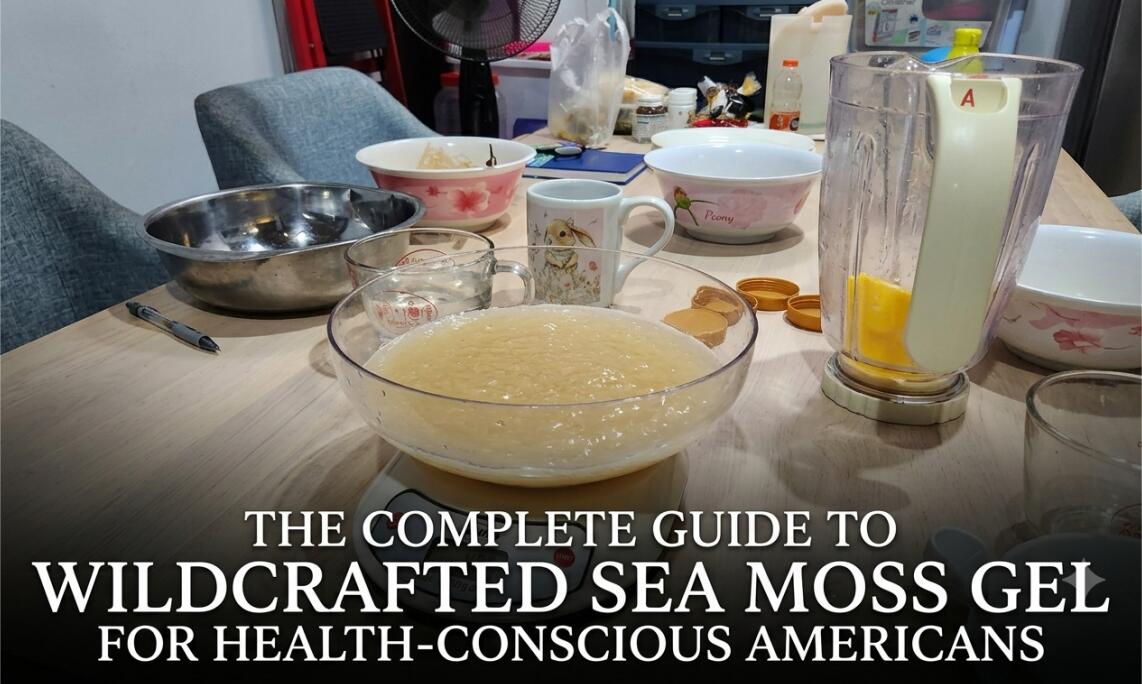
Why does it have to be in gel form? The process of soaking dried sea moss and blending it with purified water activates its high water-soluble fiber content, turning it into a gelatinous substance that is easy to digest and easy to mix into daily foods without damaging its nutritional structure.
In the U.S. supplement market, the word natural often loses its meaning because of regulatory exploitation. However, in the sea moss industry, the difference between pool-grown sea moss and wildcrafted sea moss is very clear, both in terms of nutritional integrity and economic value. Below is a comparison of sea moss origins:
Wildcrafted sea moss is harvested directly from its natural habitat by local fishermen who collect algae growing on rocks in open seawater. This algae depends on a dynamic marine ecosystem to absorb minerals. This characteristic is exactly what premium consumers are looking for: a product that has not been manipulated by mass agricultural processes.
For brand owners or health retailers who want to sell this product in the U.S. market, including proof of origin and quality documentation such as a Certificate of Analysis (CoA) is no longer just an aesthetic label option, but a crucial validation of product safety.
Consumers in the United States today are highly critical; they no longer buy products solely because of celebrity testimonials. The effectiveness of a supplement must be felt biologically. Based on comparative studies of red macroalgae characteristics, the following are the main functional areas in which sea moss gel can provide real benefits:
Sea moss is rich in sulfated polysaccharides that function as natural prebiotics. This soluble fiber does not break down in the stomach but instead travels to the large intestine, where it becomes “food” for beneficial bacteria such as Bifidobacteria and Lactobacillus. When your gut microbiome is balanced, nutrient absorption becomes more efficient, which directly contributes to higher daily energy levels and reduced bloating.
For those who frequently experience chronic fatigue even when they get enough sleep, the problem often lies in a sluggish thyroid gland. The natural iodine content in sea moss gel helps the thyroid produce the hormones thyroxine (T4) and triiodothyronine (T3) consistently, keeping the basal metabolic rate functioning at an optimal rhythm.
For modern consumers, wellness is about biological efficiency. What actually happens when you add one or two tablespoons of this gel to your daily routine?
First, it improves the digestive system. This gel acts as a prebiotic, a type of soluble fiber that is not broken down by stomach acid. Instead, it travels to the large intestine and becomes a primary food source for beneficial bacteria such as Bifidobacteria. When your gut microbiome is happy, nutrient absorption from other foods becomes much more efficient. In short: less bloating, more energy.
Second, it supports stable energy through the thyroid. The thyroid gland needs iodine to produce hormones that control how quickly the body turns food into fuel. Mild iodine deficiency is one of the hidden reasons why many professionals in major cities feel tired all the time. Sea moss gel provides a steady supply of organic iodine, helping keep your metabolism on a stable rhythm without the fluctuations caused by caffeine.
Now let us look at it from the perspective of business compliance in the United States. The Food and Drug Administration (FDA) classifies sea moss gel as a dietary supplement. This means that, legally, your product label cannot include medical claims such as “cures thyroid problems” or “prevents inflammation.”
